Special-Purpose Testing Machines & Intelligent Automation
We engineer testing systems around your product, your requirements, and your quality objectives.
We design and build customised testing machines for the mechanical, automotive, and industrial sectors — combining mechanical design, electrical and electronic systems, instrumentation, PLC programming, robotics, AI-enabled inspection, IoT, and software — to improve testing consistency, accuracy, productivity, and traceability.
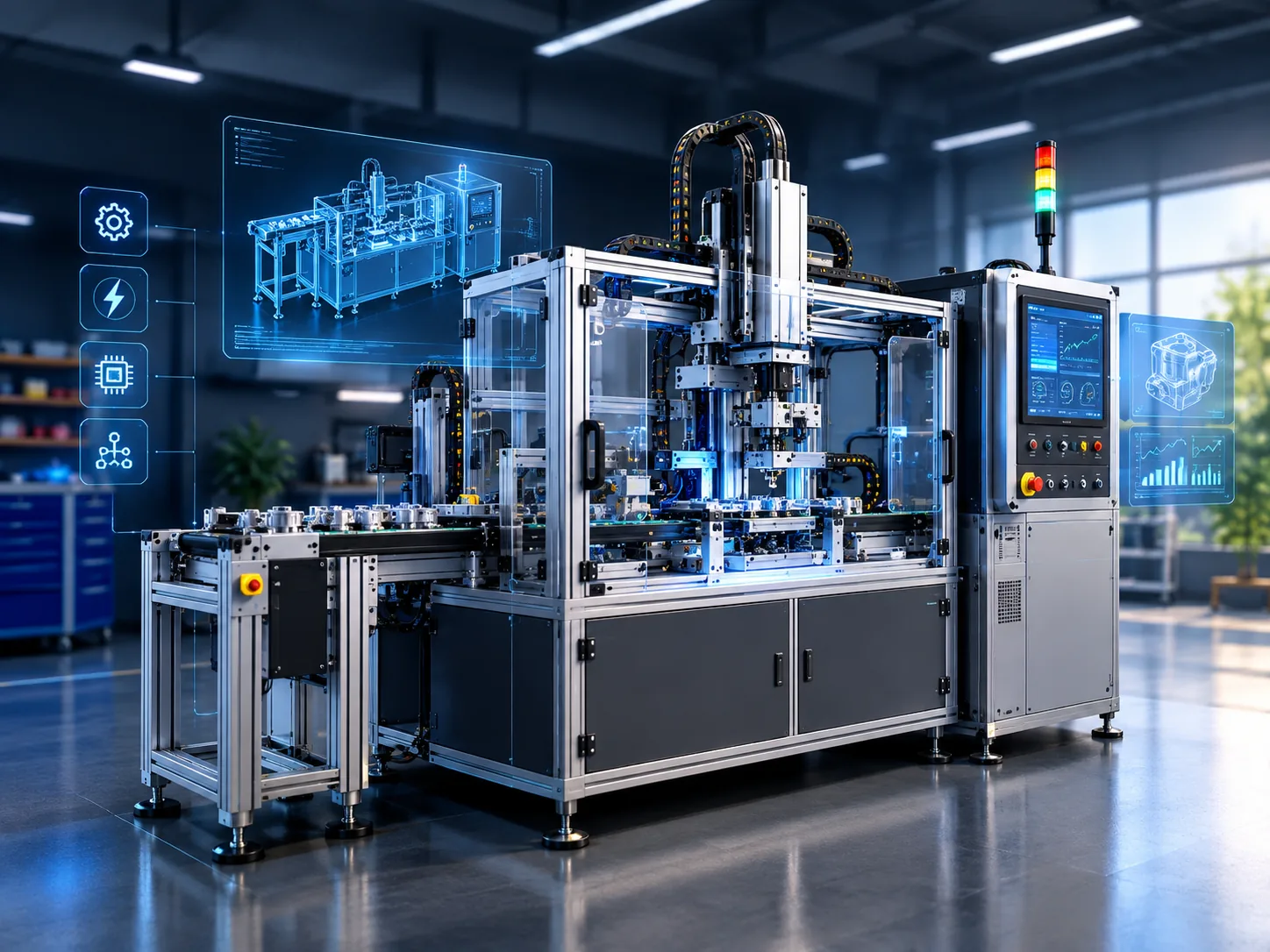
Our testing machine capabilities
01 · Mechanical Testing Machines
- Static load and force testing systems
- Compression, tension, and bending rigs
- Torque and rotational testing
- Endurance and cyclic testing
- Displacement and deflection measurement
- Custom component performance rigs
02 · Automotive Testing Machines
- Component functional testing
- Assembly verification stations
- Leak testing systems
- Torque and fastening verification
- End-of-line testing equipment
- Automated pass/fail inspection
03 · Dimensional Inspection & Measurement
- Custom checking fixtures and gauges
- Automated dimensional inspection
- Sensor-based position and displacement measurement
- Machine vision inspection stations
- Geometric verification systems
- Measurement data acquisition and reporting
04 · Product Validation Equipment
- Product-specific load and endurance rigs
- Thermal and environmental test equipment
- Pressure and flow test systems
- Automated test sequences
- Custom fixtures and enclosures
- Instrumentation and data logging
Integrated technologies
- Mechanical engineering: structures, actuators, fixtures, mechanisms, tooling, and guarding
- Electrical engineering: power distribution, panels, drives, wiring, and control architecture
- Electronics & instrumentation: load cells, pressure transducers, temperature sensors, encoders, and data acquisition
- PLC & HMI automation: test sequences, operator interfaces, interlocks, alarms, and pass/fail logic
- Robotics: loading, unloading, handling, positioning, and automated inspection
- Machine vision & AI: defect classification, optical inspection, OCR, and anomaly detection
- Industrial IoT: machine connectivity, production data, condition monitoring, and dashboards
- Software integration: test applications, databases, reports, traceability, and ERP/MES/QMS links
AI-enabled testing & inspection
- Automated visual inspection for surface defects, missing parts, and assembly errors
- AI-assisted defect classification with models validated for the application
- Intelligent pass/fail support combining sensor readings, rules, and AI output
- Anomaly detection in test patterns and machine behaviour
- Automated quality reporting linking results, images, and product IDs
Productivity & maintenance improvement
- Productivity improvement studies for machines and production lines
- Preventive maintenance planning and implementation
- Predictive maintenance from vibration, temperature, current, and cycle data
- Machine life improvement studies
- Real-time monitoring, digital test records, and remote diagnostics
Our approach
- 01Requirement DefinitionProduct, test standard, loads, ranges, accuracy, cycle time, and acceptance criteria.
- 02Concept & Mechanical DesignMachine architecture, fixtures, actuators, safety, and 3D CAD.
- 03Electrical & InstrumentationSensors, measurement systems, drives, controls, and electrical design.
- 04Automation & SoftwarePLC logic, HMI screens, test sequences, data logging, and interfaces.
- 05AI, Robotics & ConnectivityVision systems, robots, IoT monitoring, and analytics as required.
- 06Integration & VerificationFunctionality, readings, sequence logic, safety, and performance checks.
- 07Commissioning & HandoverInstallation, operator training, documentation, and maintenance planning.
What you receive
- Machine concept and design documentation
- Mechanical drawings, CAD models, and layouts
- Electrical schematics and control-panel documentation
- Instrumentation and sensor specifications
- PLC, HMI, and test-sequence software
- Test data acquisition and reporting
- Machine vision, AI, robotics, and IoT integration
- Verification and commissioning documentation
- Operating instructions and maintenance recommendations
- Training and support
Tools & technology
Who it's for
Safety interlocks and critical protective functions use properly designed safety-related control systems — never an AI model alone.
Related services
Frequently asked questions
What disciplines are covered in-house?
Mechanical design, electrical panels, electronics and instrumentation, PLC/HMI programming, robotics, machine vision, and IoT — one point of contact and no interface risk between sub-contractors.
What is a typical project timeline?
A standard testing machine project runs about 8–16 weeks from requirement sign-off to commissioning, depending on complexity.
Ready to start?